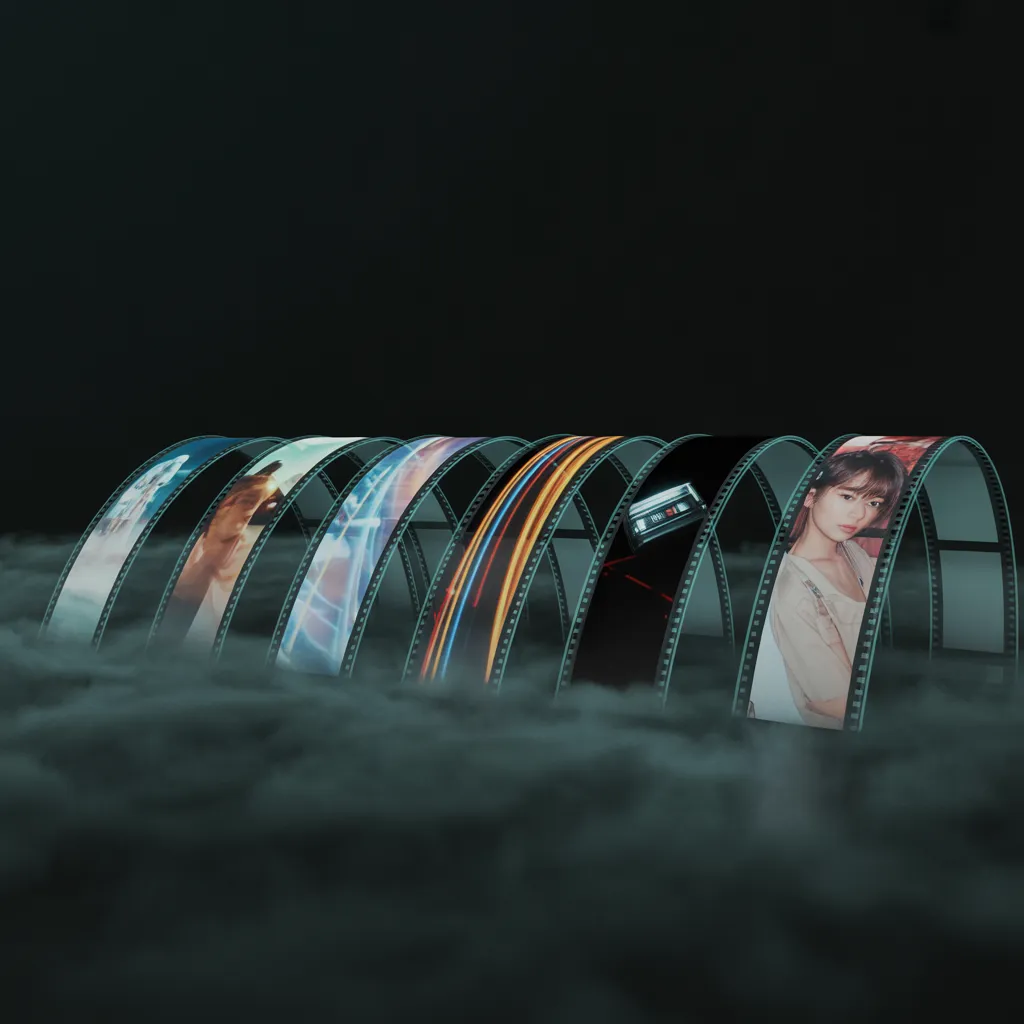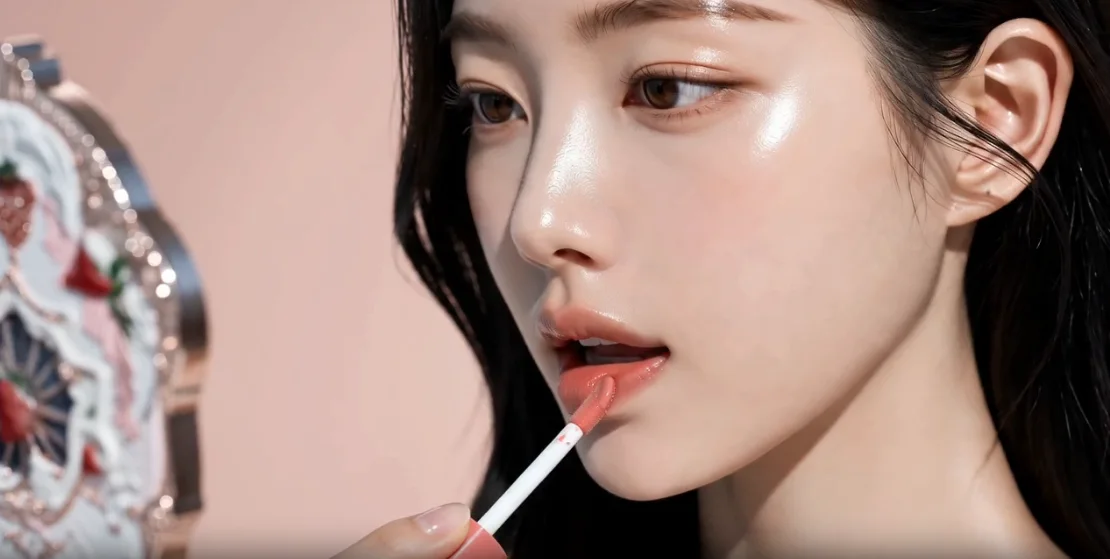
The 10 Best AI Image Generation Models in 2026 (Ranked and Compared)
The 10 frontier AI image and video models that define 2026, ranked and compared. GPT Image 2, Nano Banana 2, Seedream, FLUX Kontext, Seedance 2.0, Veo 3, Kling 2.5, Imagen, Ideogram, and Qwen, with the exact use case each one wins.
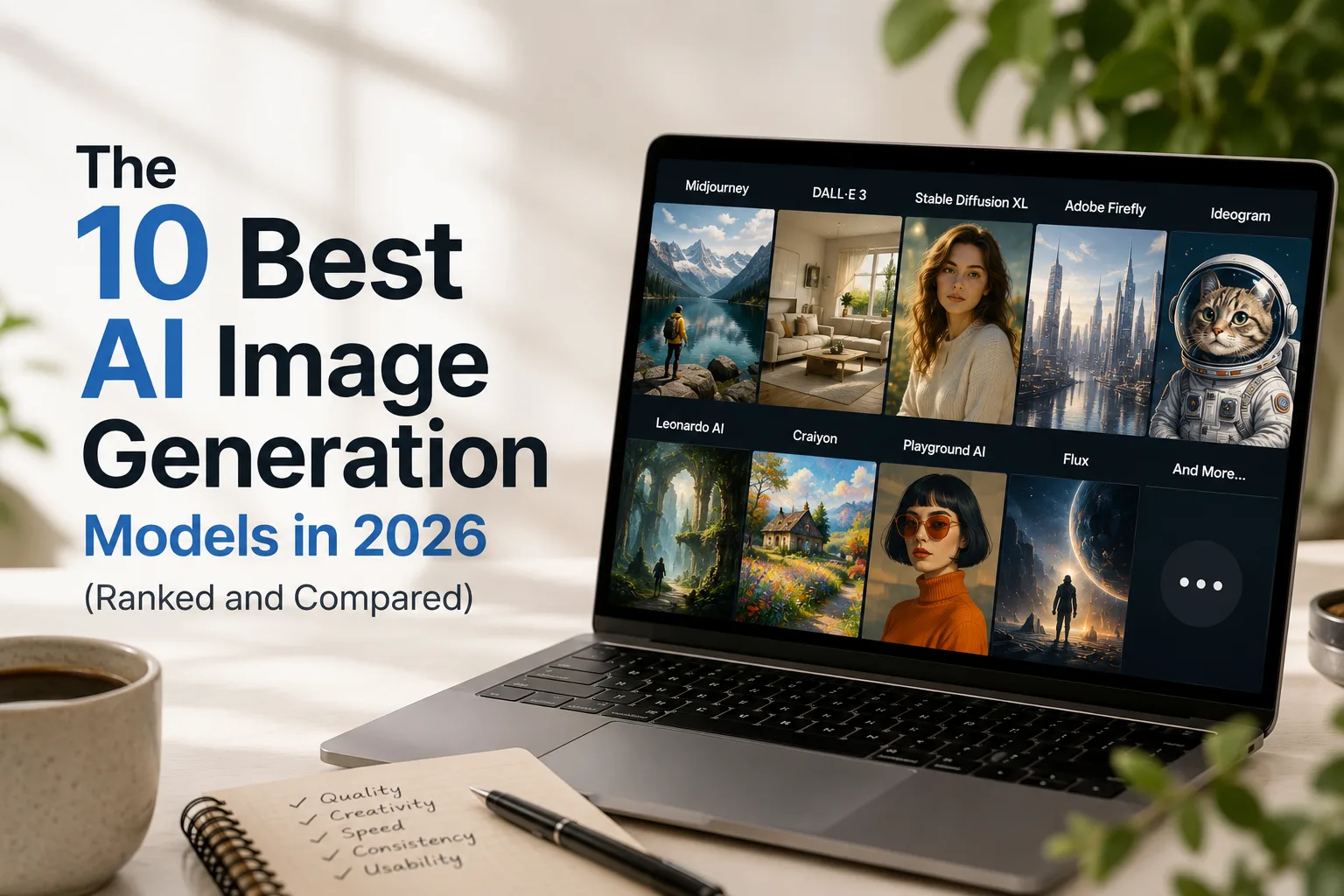
In 2024, "best AI image generator" meant picking one app and accepting its limits. In 2026, the conversation shifted entirely. Frontier models leapfrog each other every few months, and no single model dominates every use case.
GPT Image 2 wins on text accuracy. Seedream wins on editorial fashion. Nano Banana 2 wins on speed and clean product shots. FLUX Kontext owns image editing. Each model has a specific strength, and the creators winning in 2026 are the ones who learned to pick the right model for each task instead of forcing one model to do everything.
This is the ranked list of the 10 frontier AI image generation models that define 2026, what each one does best, and how to actually use them.
Use all 10 models on Gendia, one subscription, no model-hopping
How we ranked these models
Quick note before the list: this ranking isn't "which model is best overall" because no such thing exists in 2026. The ranking reflects:
- Output quality in each model's strongest use case
- Speed of generation
- Reliability across diverse prompts
- Versatility across creative contexts
- Industry adoption by professional creators
Each model is scored against its peers in the same category, not across categories. A model that's #3 overall might be #1 for a specific use case, that's noted where relevant.
1. GPT Image 2, best for text in images and reasoning
Specialty: Photorealistic images with text rendering, complex reasoning prompts, multi-step instructions.
Released: April 2026
What it does best: GPT Image 2 broke the long-standing "AI can't render text" barrier in 2026. It hits roughly 99% character accuracy on text in images across English, Korean, Japanese, and Chinese, a leap that opened up entire categories of commercial use (product packaging, restaurant menus, branded merchandise, signage).
It also reasons about prompts the way an attentive designer would. If you describe a complex scene with multiple subjects, GPT Image 2 maintains anatomical accuracy, spatial relationships, and stylistic consistency better than any competitor.
Strengths:
- Text rendering (signs, labels, brand text)
- Multi-language character support
- Complex multi-subject compositions
- Natural-language prompt interpretation
- Photorealistic human faces and hands
Limitations:
- Slower generation than speed-focused models
- Doesn't support negative prompts or bracket weights
- Premium-tier pricing across most platforms
Best for: Branded marketing, product packaging shots, restaurant menus, multilingual creative work, anything with text in the image.
2. Nano Banana 2, best for clean product shots and speed
Specialty: Fast, clean ecommerce-ready imagery with accurate color reproduction.
Released: Late 2025, updated Q1 2026
What it does best: Nano Banana 2 produces the cleanest "this looks like a real photograph" output of any frontier model in 2026, with generation speeds 3-5x faster than competitors. The output requires minimal cleanup, has accurate color reproduction, and renders edges sharp enough for marketplace listings.
For sellers processing dozens or hundreds of products, Nano Banana 2's speed-to-quality ratio is unmatched. Where Seedream takes 30 seconds to produce one magazine-quality shot, Nano Banana 2 produces three clean catalog shots in the same window.
Strengths:
- Fastest generation among quality-focused models
- Accurate color reproduction
- Clean sharp edges (ideal for white background work)
- Consistent output across batch generations
- Minimal hallucination on simple subjects
Limitations:
- Less editorial / artistic than Seedream
- Struggles with complex multi-subject scenes
- Text rendering is good but not at GPT Image 2 level
Best for: Ecommerce product photography, marketplace listings, Amazon/Etsy primary shots, high-volume catalog work.
3. Seedream, best for editorial and fashion
Specialty: Magazine-quality editorial photography, premium fashion aesthetic, atmospheric storytelling.
Released: 2025, continuously updated
What it does best: Seedream produces output that reads as "shot for Vogue" rather than "generated by AI." Its strength is atmospheric and emotional, the kind of imagery that fashion brands, premium hospitality, and lifestyle publications use for hero campaigns.
Where other models render technically correct images, Seedream renders images with mood. Lighting feels intentional. Composition feels considered. Skin texture has the subtle warmth of natural photography rather than the airbrushed perfection that betrays AI origin.
Strengths:
- Premium editorial aesthetic
- Best human anatomy and facial expressions in 2026
- Atmospheric lighting and mood
- Fashion and lifestyle context
- Multi-subject scenes with people
Limitations:
- Slower than speed-focused models
- Sometimes over-stylizes when you want clean catalog output
- Premium positioning means higher compute cost
Best for: Fashion photography, premium brand campaigns, hospitality marketing, lifestyle editorial content, anywhere atmosphere matters more than technical clarity.
4. FLUX Kontext, best for image editing
Specialty: Editing existing images while preserving the original subject, background swaps, lighting changes, environmental adjustments.
Released: 2025
What it does best: FLUX Kontext occupies a unique position in 2026: it's not really an image generator, it's an instruction-based image editor. You feed in a real photograph, and FLUX Kontext modifies parts of it according to your prompt while preserving the rest.
The use case is huge in ecommerce: take a real product photo and ask FLUX Kontext to swap the background to "sunlit kitchen counter" while keeping the actual product unchanged. The reflective metal stays accurate. The label text stays readable. Only the background changes.
This is the model that bridges real photography and AI imagery. For brands that need accuracy on the product itself but creativity in the setting, nothing else competes.
Strengths:
- Preserves original subject perfectly during edits
- Background and environment swaps
- Lighting and atmospheric changes
- Style transfer onto existing images
- Hybrid workflows (real photo + AI environment)
Limitations:
- Not designed for generation from scratch
- Requires a source image to work
- Slower than pure generation models
Best for: Ecommerce product photography hybrid workflows, real-photo-to-AI-environment, lifestyle scene creation from product shots, branded content where product accuracy is non-negotiable.
5. Seedance 2.0, best for cinematic AI video
Specialty: Cinematic video generation with natural movement, camera direction, and atmospheric mood.
Released: Early 2026
What it does best: Seedance 2.0 isn't strictly an image model, but its image-to-video and text-to-video output sets the cinematic standard for 2026. Where other video models produce technically correct movement, Seedance produces shots that feel directed, intentional camera work, natural human motion, atmospheric lighting that changes over the clip.
The key advantage is prompt fidelity to camera direction. Specify "slow dolly in, shallow depth of field, anamorphic lens flare" and Seedance delivers the actual cinematic technique. Other models interpret the description loosely. Seedance interprets it like a cinematographer.
Strengths:
- Cinematic camera movement
- Natural human and character motion
- Atmospheric lighting that evolves through clips
- 5-10 second clip generation
- Image-to-video continuity
Limitations:
- Generation time is slower than image-only models
- Best with detailed prompts (struggles with vague input)
- Limited clip duration
Best for: Cinematic content, brand films, music video sequences, narrative storytelling, premium ad creative.
6. Veo 3, best for premium video generation
Specialty: Highest-fidelity AI video generation, native synchronized audio, premium output quality.
Released: 2025, updated 2026
What it does best: Veo 3 from Google DeepMind sits at the absolute top of the video generation hierarchy in 2026. The fidelity is closest to "indistinguishable from professional cinematography" of any model. It also generates synchronized audio natively, dialogue, ambient sound, music, within the same output.
The trade-off is access. Veo 3 is the most compute-intensive video model in production. Generation times are longer, costs are higher, and the workflow assumes you're producing hero content rather than batch creative.
Strengths:
- Highest video fidelity in 2026
- Native synchronized audio generation
- Cinema-grade output quality
- Complex multi-shot scenes
- Realistic physics and motion
Limitations:
- Highest compute cost in the category
- Longer generation time
- Less prompt control than purely visual models
- Limited availability across platforms
Best for: Hero brand campaigns, premium short-form content, narrative films, AAA marketing creative.
7. Kling 2.5, best for character animation and motion control
Specialty: Character animation, motion control, lip sync, full-body movement.
Released: 2025, regularly updated
What it does best: Kling 2.5 specializes in animating characters, not just moving them, but giving them performative motion. Lip sync to provided audio. Body language that matches emotional cues. Hand gestures, head turns, facial expressions that feel acted rather than randomly generated.
This is the model that bridges static character images and animated storytelling. For creators building AI-generated narrative content, Kling 2.5 is what turns a portrait into a performance.
Strengths:
- Character animation from still images
- Lip sync to audio input
- Motion control with reference video
- Natural facial expression range
- Multi-character scenes
Limitations:
- Best with character-focused prompts (less suited for landscapes/products)
- Motion control workflow requires reference video
- Tier-based feature access varies by platform
Best for: AI character storytelling, narrative content, animated music videos, talking-head AI content, multi-character dialogue scenes.
8. Imagen, best for stylistic versatility
Specialty: Wide stylistic range from photorealistic to illustrative to painterly, strong color theory.
Released: 2025, ongoing updates
What it does best: Imagen excels at stylistic interpretation. Ask for "1950s travel poster," "watercolor illustration," "1970s film aesthetic," "manga inking style," and Imagen delivers each style with internal consistency. It's the model that understands not just what something looks like but what era and aesthetic it belongs to.
Color theory in Imagen output is consistently strong. Palettes feel intentional. Mood matches setting. For creators working across diverse stylistic registers, Imagen is the versatile workhorse.
Strengths:
- Wide stylistic range
- Consistent style execution
- Strong color theory and palette work
- Era-specific aesthetic accuracy
- Illustrative and graphic design output
Limitations:
- Less photorealistic than dedicated photo models
- Less text accuracy than GPT Image 2
- Style-leaning rather than realism-leaning
Best for: Editorial illustration, graphic design, style-driven brand content, era-specific creative, mixed-media campaigns.
9. Ideogram, best for typography-forward design
Specialty: Typography integration, poster design, graphic art with text as central element.
Released: 2024, continuously updated
What it does best: Ideogram occupies the niche where image generation meets graphic design. Where GPT Image 2 renders text accurately within photographic compositions, Ideogram designs around text, building posters, album covers, book jackets, and editorial layouts where typography is the central visual element.
The model understands kerning, typographic hierarchy, and the relationship between text and image in graphic design contexts. For creators producing posters, packaging concepts, and text-as-art, Ideogram is the specialist.
Strengths:
- Typography-driven design
- Poster and editorial layout
- Text as visual element
- Strong kerning and type hierarchy
- Genre-aware design (album covers, books, movie posters)
Limitations:
- Less suited for pure photographic output
- Photographic realism is good but not at top-tier
- Best with text-prominent prompts
Best for: Poster design, album artwork, book covers, packaging concepts, typography-driven brand content.
10. Qwen, best for multilingual prompt interpretation
Specialty: Strong multilingual prompt understanding, particularly Asian languages, cultural context accuracy.
Released: 2025, updated 2026
What it does best: Qwen specializes in understanding prompts written in non-English languages with high fidelity. For creators writing prompts in Korean, Japanese, Chinese, or other Asian languages, Qwen interprets cultural context, idiomatic descriptions, and culturally specific aesthetic references better than competitors trained primarily on English.
This isn't just translation, it's cultural understanding. A Korean prompt describing 한복 (hanbok) generates accurate traditional Korean dress. A Japanese prompt describing 着物 (kimono) renders with cultural specificity. Western models often homogenize Asian cultural elements; Qwen preserves them.
Strengths:
- Multilingual prompt interpretation
- Cultural specificity in Asian aesthetics
- Strong text rendering in non-Latin scripts
- Regional creative context accuracy
- Pairable with other models for refinement
Limitations:
- English prompt performance is strong but not category-leading
- Less optimized for Western photographic styles
- Best as a complement to other models, not a replacement
Best for: Asian-market creative work, multilingual brand content, culturally specific imagery, regional campaigns.
Quick comparison: which model when
| Use case | Best model | Why |
|---|---|---|
| Branded packaging with label text | GPT Image 2 | 99% text accuracy |
| Amazon/Etsy marketplace shots | Nano Banana 2 | Clean, fast, accurate |
| Fashion editorial | Seedream | Premium aesthetic |
| Background swap on real product | FLUX Kontext | Preserves original product |
| Cinematic video for brand campaign | Seedance 2.0 | Cinematographer-grade direction |
| Hero film for major launch | Veo 3 | Highest fidelity |
| Character animation / storytelling | Kling 2.5 | Best motion + lip sync |
| Poster or album cover design | Ideogram | Typography-first |
| Era-specific style (1970s, manga, etc.) | Imagen | Stylistic versatility |
| Korean/Japanese/Chinese cultural creative | Qwen | Cultural accuracy |
The honest reality about "best AI model"
There is no single best AI image generation model in 2026. The model that wins for jewelry packaging shots (GPT Image 2) loses to Seedream for fashion editorial. The model that wins for fashion editorial loses to Nano Banana 2 for high-volume catalog work. The model that wins for catalog loses to FLUX Kontext when you need to preserve a real product.
The creators winning in 2026 are the ones who learned to think of AI models the way photographers think of cameras and lenses, different tools for different jobs, and the skill is knowing which tool matches which job.
The problem most creators face: subscribing to 8 different platforms to access all these models. Each subscription, each interface, each set of credits. The workflow fragments. The cost compounds. The output suffers.
This is why Gendia exists. One subscription. 30+ frontier models including all 10 ranked here. Switch between GPT Image 2, Seedream, Nano Banana 2, and the rest in a single workflow. Match the model to the task without switching platforms.
Use all 10 models on Gendia in one subscription
Frequently asked questions
What is the best AI image generation model in 2026?
There's no single best model. GPT Image 2 leads for text and reasoning, Seedream leads for editorial fashion, Nano Banana 2 leads for clean ecommerce, FLUX Kontext leads for image editing. The skill is matching the model to the task, not picking one for everything.
Can I access all these models in one platform?
Yes. Gendia hosts all 10 frontier models ranked here plus 20+ additional models in a single subscription. This avoids the fragmentation problem of subscribing to multiple AI platforms for each specialty.
Which AI model has the best text rendering in images?
GPT Image 2. It achieves approximately 99% character accuracy across English, Korean, Japanese, and Chinese, the highest in any frontier model in 2026. For any image where text on a sign, label, or packaging must read correctly, GPT Image 2 is the standard.
Which AI model is best for ecommerce product photography?
For pure white background marketplace shots: Nano Banana 2 (speed + clean output). For lifestyle and editorial product shots: Seedream. For branded packaging with text: GPT Image 2. For editing existing real product photos: FLUX Kontext. Top-performing sellers use a combination, not just one.
How do AI image models differ from AI image apps?
Models are the underlying AI engines (GPT Image 2, Seedream, Nano Banana 2, etc.). Apps are interfaces that use one or more models. The same model can power multiple apps with different user experiences. Knowing the underlying model matters because each model has distinct strengths regardless of which app exposes it.
Are these models open source or proprietary?
Mixed. FLUX, Stable Diffusion family, and Qwen have open-source variants. GPT Image 2, Seedream, Nano Banana 2, Veo 3, and Kling 2.5 are proprietary. Platforms like Gendia host both proprietary and open-source models under unified pricing.
Which AI model is fastest?
Nano Banana 2 leads on raw speed for image generation. For video, Seedance 2.0 is faster than Veo 3 but slower than image-only models. Speed varies based on prompt complexity and resolution, simpler prompts at lower resolution generate fastest across all models.
Will this list change in 6 months?
Almost certainly. AI image generation evolves on a 3-6 month cycle. New models launch, existing models get major updates, the ranking order shifts. This list reflects 2026. The principle of matching model to task remains true regardless of which specific models lead.
The shortcut
Three principles for choosing AI image models in 2026:
1. No model wins everything. Match the model to the use case.
2. Text in image = GPT Image 2. Editorial = Seedream. Clean catalog = Nano Banana 2. Edit existing photo = FLUX Kontext.
3. Multi-model workflows beat single-model workflows. Don't lock yourself into one platform.
Ten frontier models. One ranked guide. The skill is selection, not commitment.
Related reading
- Gendia x GPT Image 2: Everything You Need to Know, a deep dive on the #1 model in this list
- How to Make Product Shots with AI: The Complete 2026 Guide, model selection applied to ecommerce
- The Perfect Prompt: 5 Tricks for Realistic AI Video Movement, choosing between Seedance, Veo 3, and Kling for video
About the author
Farah is the Content Creator at Gendia, the multimodal AI platform hosting 30+ frontier AI models including GPT Image 2, Nano Banana 2, Seedream, FLUX Kontext, Seedance 2.0, Veo 3, Kling 2.5, Imagen, Ideogram, and Qwen, all 10 models ranked in this guide. She writes about AI image and video creation, prompt engineering, and the creative workflows of the post-Sora era.
- #BestAIImageGenerationModels2026
- #AIImageGenerator
- #GPTImage2
- #NanoBanana2
- #Seedream
- #FLUXKontext
- #Seedance2.0
- #Veo3
- #Kling2.5
- #Imagen
- #Ideogram
- #Qwen
- #AIVideoGeneration
- #AIModelComparison